
Rashida Tlaib is an American politician, attorney, and Democratic member of the United States House of Representatives from Michigan. Her public career has included work in community advocacy, service in the Michigan Legislature, and federal office. She entered Congress in January 2019 after winning election to Michigan’s 13th Congressional District in 2018 and later became the representative for the state’s 12th Congressional District following redistricting.
Tlaib’s career has received attention for several different reasons. Her work before Congress included involvement in community and environmental disputes in Detroit, particularly opposition to the storage of petroleum coke along the Detroit River. As a member of Congress, she has focused on issues including environmental protection, water infrastructure, housing, economic policy, constituent services, and other areas of federal policy.
Her public profile has also been shaped by cultural and political events. In January 2019, she wore a traditional Palestinian thobe during her congressional swearing-in ceremony. The event generated widespread media coverage and contributed to the #TweetYourThobe social-media campaign. Later developments in her congressional career, including a House censure in November 2023, also became part of the public record surrounding her time in Congress.
Examining Tlaib’s career requires distinguishing between documented government actions, statements from her own offices, independent reporting, and interpretations made by political supporters or opponents. This article therefore focuses on verifiable events and identifies claims that originate from Tlaib’s congressional or campaign organizations.
Early Life and Education
Rashida Tlaib was born in Detroit, Michigan, on July 24, 1976. According to the United States House of Representatives’ Office of History, Art & Archives, she graduated from Southwestern High School in Detroit in 1994. She later earned a bachelor’s degree from Wayne State University in 1998 and a law degree from Western Michigan University in 2004.
Tlaib is the daughter of Palestinian immigrants and was raised in Detroit. Her background later became an important part of her public identity, particularly after she entered national politics and became one of the first two Muslim women elected to Congress in 2018.
Before becoming an elected official, Tlaib worked in law and public-interest advocacy. The official House historical record lists her as a lawyer and notes that she worked as a staff member in the Michigan state House before becoming an elected state representative.
Her professional experience before elected office is relevant to understanding the direction of her later political career. Rather than entering public office directly from a conventional political background, she had experience working with legal and community organizations and later became involved in local disputes involving environmental conditions, economic development, and government policy.
Work in the Michigan Legislature
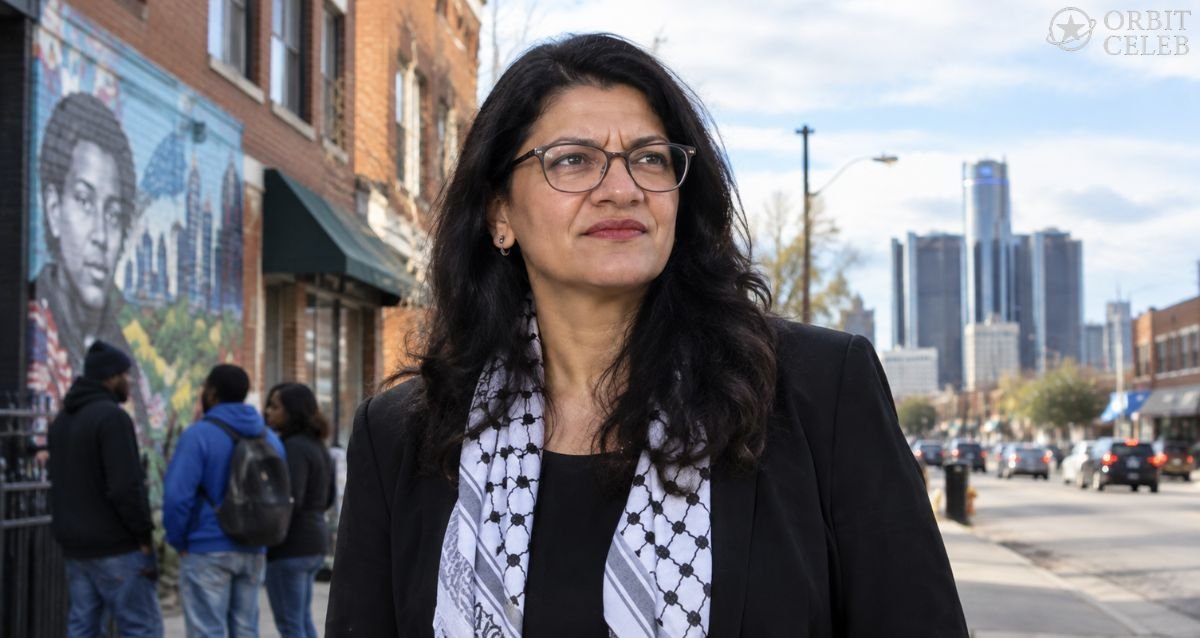
Tlaib entered Michigan state politics before her election to Congress. She worked in the Michigan House of Representatives as a staff member in 2007 and 2008 before becoming a state representative in 2009.
She served in the Michigan House from 2009 through 2014. During that period, she represented a district in the Detroit area and became involved in local issues affecting residents and communities in southwest Detroit.
Her work in the Michigan Legislature included constituent assistance and policy issues involving economic development, environmental conditions, and government services. Her later congressional biography also highlights her earlier involvement in community advocacy and environmental disputes.
Her time in state office established a political career that was strongly connected to Detroit and its surrounding communities. It also provided the background for her later work in Congress, where several of the issues she had previously addressed at the local and state levels became part of her federal legislative agenda.
The Detroit Petroleum Coke Dispute
One of the most documented episodes of Tlaib’s early political career involved petroleum coke, commonly known as petcoke.
Petroleum coke is a carbon-rich material produced during the oil-refining process. In 2013, large quantities of the material were stored along the Detroit River, creating controversy among residents, activists, local officials, and companies involved in its storage and transportation.
The issue attracted attention because residents reported concerns about dust from the large piles and the potential effect on nearby neighborhoods. Contemporary reporting by the Detroit Metro Times described protests against petroleum-coke storage and documented Tlaib’s involvement as a Michigan state representative.
In June 2013, Metro Times reported that protesters blocked trucks from delivering petroleum coke to a storage site near the Detroit River. The publication identified Tlaib as a state representative who criticized the continued dumping of the material at the riverside location.
Later reporting described Tlaib’s involvement in efforts to investigate the material. A Metro Times profile published several years later reported that she obtained samples of petroleum coke after residents raised concerns about the material and had them tested.
Tlaib’s own congressional office gives a similar account, stating that she collected samples after residents raised concerns about black dust and arranged for the material to be tested. Because this account comes from her congressional office, it should be treated as an account provided by her own organization rather than as an independent assessment of the entire episode.
Independent reporting provides additional context. Metro Times reported that the petroleum-coke issue had become a major environmental controversy in southwest Detroit and that residents were concerned about industrial pollution in the area.
The dispute became one of the most frequently cited examples of Tlaib’s environmental activism before Congress. It also connected her political career with a broader debate over industrial pollution, environmental regulation, and the conditions experienced by communities located near major industrial facilities.
Community Advocacy in Detroit
Environmental issues were not the only part of Tlaib’s work before Congress.
Her professional background included work at the Sugar Law Center for Economic and Social Justice. Her congressional biography describes her work there as part of a broader effort involving economic and social justice.
Tlaib’s congressional office has also highlighted her involvement in community campaigns concerning transportation, neighborhood conditions, industrial activity, and public health.
One example involved the “We Have A Right To Breathe” campaign, which addressed concerns about heavy truck traffic and pollution in southwest Detroit. Tlaib’s congressional biography describes her participation in organizing residents around the issue.
Because descriptions of these activities on her congressional website are written by her own office, claims about the scale or effectiveness of these campaigns should be distinguished from independently reported outcomes.
Nevertheless, contemporary and later reporting confirms that Tlaib’s political work was closely connected to neighborhood-level disputes and community organizing in Detroit.
Read Also: Exploring the Life and Political Impact of Rashida Tlaib
Election to Congress
Tlaib entered federal politics in the 2018 election cycle.
She won the Democratic primary for Michigan’s 13th Congressional District and subsequently won the general election. She assumed office on January 3, 2019.
The House Office of History, Art & Archives lists Tlaib as a member of the 116th Congress beginning in 2019 and records her subsequent service in the 117th, 118th, and 119th Congresses.
Her election in 2018 attracted national attention because she and Minnesota Democrat Ilhan Omar became the first two Muslim women elected to the United States Congress.
Tlaib’s arrival in Washington was therefore significant both as a change in her own career and as part of the broader increase in the number of women and members of historically underrepresented communities entering Congress during the 2018 election cycle.
Representation After Redistricting
Tlaib originally represented Michigan’s 13th Congressional District. Following congressional redistricting, she later became the representative for Michigan’s 12th Congressional District.
The current district includes Detroit, Dearborn, Southfield, and surrounding communities.
Her congressional office describes constituent services as an important part of its district operation. Residents can contact her offices for assistance with federal agencies, including issues involving Social Security, veterans’ matters, taxes, and other government programs.
The office operates neighborhood service centers designed to help residents communicate with federal agencies and navigate government programs.
Neighborhood Service Centers
Constituent services have become a notable part of Tlaib’s district operation.
In 2020, her congressional office announced that its neighborhood service centers had returned more than $1.2 million to residents through assistance with matters such as Social Security, unemployment benefits, tax refunds, and federal stimulus payments.
The announcement described four neighborhood service centers operating before the COVID-19 pandemic. These centers were located in Detroit, River Rouge, and Inkster.
The purpose of the centers was to provide residents with assistance in dealing with government agencies and other administrative problems.
Tlaib’s current congressional website reports more than 11,000 constituent cases resolved and more than $10 million returned to constituents. These are figures reported by her own congressional office and therefore should be identified as office-reported figures rather than independently audited totals.
The existence of the service centers themselves is separately documented through the congressional office’s current service-center information.
This distinction is important when evaluating the broader question of Tlaib’s constituent-service record. The number of cases and amount of money reported by the office represent its own accounting, while the operation of the service centers can be established through congressional records and office documentation.
Environmental Policy in Congress
Environmental policy has remained one of the recurring areas of Tlaib’s congressional activity.
Her congressional office identifies environmental justice, clean water, lead contamination, and industrial pollution among its policy priorities.
Her legislative work has included proposals involving environmental regulation and the treatment of communities affected by pollution.
For example, the Detroit Metro Times reported in 2022 on legislation introduced by Tlaib concerning cumulative pollution impacts. The proposal sought to change how environmental impacts would be considered when federal environmental decisions are made.
Tlaib’s congressional office also identifies lead contamination and water infrastructure as areas of legislative activity.
When describing such work, it is important to distinguish between a bill being introduced, a bill receiving committee consideration, a measure passing one chamber of Congress, and a proposal becoming federal law. A member of Congress can introduce or support legislation without that legislation becoming law.
For this reason, individual legislative records are more useful than broad descriptions such as “passed environmental reforms” unless the specific legislative outcome is documented.
The Get the Lead Out Caucus
Lead contamination and drinking-water infrastructure have also been part of Tlaib’s congressional work.
Her congressional office states that she helped establish the Get the Lead Out Caucus, which focuses on removing lead pipes and addressing lead contamination in drinking-water systems.
The issue has particular relevance to communities where aging infrastructure creates potential exposure to lead.
Tlaib’s office has connected this work to broader environmental-justice concerns and to federal investment in infrastructure.
Again, the distinction between advocacy and legislative outcomes is important. Membership in or leadership of a congressional caucus demonstrates political activity around an issue, but it does not by itself establish that a specific policy has been enacted.
The 2019 Swearing-In and Palestinian Thobe
Tlaib’s first day in Congress was also one of the most widely reported cultural moments of her career.
When she was sworn into office in January 2019, Tlaib wore a traditional Palestinian thobe.
A thobe is a long garment traditionally associated with Palestinian culture and often decorated with hand-embroidered patterns.
Tlaib had announced before the ceremony that she planned to wear the garment. The choice attracted national and international media coverage because it connected her first day in Congress with her Palestinian heritage.
Contemporary reporting by Anadolu Agency described the swearing-in and the response to Tlaib’s clothing. The report noted that the event generated a social-media movement using the hashtag #TweetYourThobe.
The Forward also reported on the online response and described women sharing photographs of their own traditional garments following Tlaib’s appearance.
The episode became more than a single political fashion story. It became a documented social-media event involving people who used photographs of traditional clothing to express cultural identity.
The #TweetYourThobe Campaign
The #TweetYourThobe campaign developed immediately around Tlaib’s swearing-in.
According to contemporary reporting, Susan Muaddi Darraj introduced the hashtag after Tlaib announced that she would wear a Palestinian thobe for the ceremony.
The campaign encouraged people to share photographs of themselves wearing thobes or other traditional garments.
The event received coverage from multiple news organizations, making it possible to document the development of the campaign without relying exclusively on Tlaib’s own social-media posts.
The episode is particularly relevant to understanding the cultural dimension of Tlaib’s public profile. Her political career had already been connected to her Palestinian-American background, but the swearing-in ceremony produced a highly visible moment in which clothing became part of a larger public conversation about cultural identity.
The campaign was subsequently documented as a separate subject on Wikipedia, providing evidence that the event developed beyond an individual social-media post and received independent attention.
Policy Areas and Political Positions
Tlaib has taken positions on a range of political issues during her congressional career.
Her congressional office identifies environmental justice, clean water, housing, economic issues, poverty, education, and other matters among its areas of work.
Her positions on national and international issues have also attracted substantial public debate.
When describing political positions, it is important to distinguish between what Tlaib herself has said, what legislation she has introduced or supported, and how outside political groups or commentators have interpreted those positions.
For example, statements concerning environmental policy can be documented through congressional legislation and public statements. Statements concerning foreign policy can be documented through congressional speeches, resolutions, votes, and official statements.
This approach allows readers to distinguish a politician’s stated position from an independent claim about the effects or consequences of that position.
The 2023 House Censure
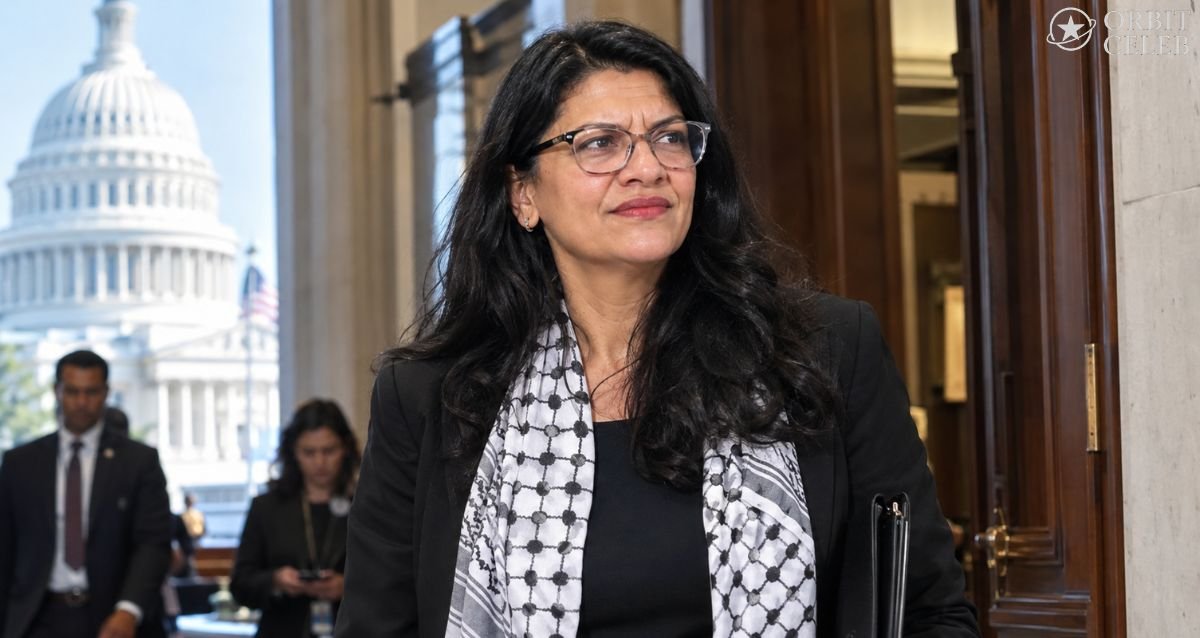
A major event in Tlaib’s congressional career occurred in November 2023, when the House of Representatives censured her through House Resolution 845.
The official House Clerk’s records show that on November 7, 2023, the House voted 234 to 188, with four members voting present and six not voting, to agree to the resolution censuring Tlaib.
The title of the resolution stated that the censure concerned accusations regarding her statements and positions related to the October 7, 2023 Hamas attack and Israel.
The resolution’s language represents the position adopted by the House in the censure resolution. It should not be presented as an independent description of disputed events or as a substitute for Tlaib’s own response.
Tlaib rejected the allegations in statements responding to the censure process. Her office said that she had condemned the killing of civilians and disputed the characterization of her positions contained in the resolution.
The House record therefore provides two distinct pieces of information that should be kept separate: the formal congressional action and Tlaib’s response to it.
The censure became one of the most significant formal disciplinary actions associated with her congressional career.
Congressional Record and Public Accountability
The 2023 censure also illustrates why congressional records are particularly important when researching political figures.
News reports can provide context and quotations, but the official House record establishes what resolution was introduced, how it was worded, and how members voted.
For a long-form biography, these records are more useful than relying on generalized descriptions of controversy.
The same principle applies to Tlaib’s legislative work. A bill number, congressional resolution, committee action, roll-call vote, or official House document can establish what happened procedurally.
Independent reporting can then be used to explain the surrounding political context.
Public Service and Political Identity
Tlaib’s public career has developed around several overlapping identities: Detroit community advocate, attorney, state legislator, member of Congress, and Palestinian-American political figure.
Her early work in Detroit connected her to neighborhood-level disputes over environmental conditions and public services.
Her time in the Michigan Legislature gave her experience with state government and constituent representation.
Her election to Congress expanded that role to the federal level, where her work has included environmental legislation, constituent services, water infrastructure, housing, and other policy issues.
At the same time, cultural events such as her 2019 swearing-in demonstrated how political representation can intersect with questions of identity and heritage.
These different aspects of her career should be considered separately rather than combined into a single judgment about her overall political impact.
How Her Record Can Be Documented
A reliable account of Tlaib’s public career can draw on several categories of sources.
The House Office of History, Art & Archives provides biographical and congressional information, including dates of service and educational background.
The current congressional office provides information about district services, policy priorities, and office-reported constituent-service figures.
Official House voting records provide documentation of congressional votes and formal actions such as the 2023 censure.
Independent publications such as the Detroit Metro Times provide contemporary reporting and historical context for local issues, particularly the petroleum-coke controversy.
Other independent news organizations have documented the 2019 thobe episode and the #TweetYourThobe campaign.
Using these sources together is more reliable than depending on a single political organization’s account.
Conclusion
Rashida Tlaib’s political career developed from legal and community work in Detroit to service in the Michigan Legislature and eventually to the United States House of Representatives.
Her early career included involvement in local disputes concerning environmental pollution and neighborhood conditions. The 2013 petroleum-coke controversy became one of the most frequently documented examples of her environmental activism before Congress, with both contemporary independent reporting and later accounts from her congressional office describing her involvement.
After entering Congress in 2019, Tlaib continued to emphasize environmental issues while also developing a constituent-service operation that included neighborhood service centers. Her office reports thousands of constituent cases resolved and millions of dollars returned to residents, although these figures are self-reported by the office and should not be treated as independently audited statistics.
Her 2019 swearing-in also became an important cultural moment. Wearing a traditional Palestinian thobe attracted widespread attention and was followed by the #TweetYourThobe campaign, which was independently reported by several publications.
Her congressional record has also included substantial political controversy. The House formally censured her in November 2023 through a recorded vote. The official congressional record establishes the action and vote totals, while Tlaib’s own statements provide her response to the allegations involved in the resolution.
Taken together, these events provide several distinct ways to understand Tlaib’s public career. Her record includes local environmental activism, state legislative service, federal representation, constituent services, environmental policy work, cultural representation, and participation in contentious national political debates.
For readers evaluating individual claims about her career, the most useful approach is to distinguish documented facts from political interpretation. Government records can establish official actions and votes; contemporary journalism can provide independent reporting and context; and statements from Tlaib’s congressional or campaign organizations can document her own account of her work while remaining identifiable as self-reported material.
This source-based approach provides a clearer picture of Rashida Tlaib’s political journey without relying on promotional descriptions, unsupported claims, or generalized judgments about her overall impact.
Editorial Disclaimer
This article is intended for informational and educational purposes only. It presents publicly available information about Rashida Tlaib’s political career, public service, environmental advocacy, legislative activity, and other documented events.
The article does not endorse or oppose Rashida Tlaib, any political party, candidate, policy position, or political viewpoint. Statements concerning political positions, achievements, controversies, or public impact are presented according to available government records, official statements, independent reporting, and other publicly accessible sources.
Where information comes from Rashida Tlaib’s congressional office, campaign organization, or other affiliated sources, it is identified as information reported by those sources and should not automatically be interpreted as independently verified. Political claims and disputed interpretations may vary among sources.
Readers should consult the original sources and official records for the most complete and current information, particularly for legislative actions, voting records, political statements, and other time-sensitive matters.
This article may be updated when reliable new information becomes available or when existing information requires correction or clarification.
Author Note
Written by Khurram Majeed
I prepared this article using publicly available government records, congressional documents, independent news reports, and information published by Rashida Tlaib’s congressional office. Political claims and disputed matters are presented with appropriate attribution rather than as personal opinion.
Where information or figures come from Tlaib’s office, they are identified as office-reported information. The purpose of this article is to provide a factual overview of Rashida Tlaib’s political career, environmental advocacy, public service, and congressional record while distinguishing documented events from political interpretations.